
Why are mountain climbers so difficult? Leia mais: Why are mountain climbers so hard

The main reason mountain climbers are so hard is because they require a good amount of coordination, flexibility, and strength in a lot of different areas of the body.
Leia mais
You can safely modify mountain climbers with the following adjustments:
- Elevate your upper body and hands.
- Tap your toes to provide more stability as you pull your opposite knee under your body.
- Maintain a slow tempo until you feel comfortable increasing the pace.
She suggests any time you do mountain climbers to perform the move in short bursts, about 30 to 40 seconds at a time, taking a rest break between sets. “Any longer than that and your shoulders will be just burnt out, and it will no longer be beneficial,” she says.

How many mountain climbers should a beginner do
For mountain climbers, begin by performing 2–3 sets of 10–20 repetitions on each leg. Choose your sets and repetitions based on your ability to maintain good technique throughout all sets and repetitions.
The model estimated that a person's hardest grade will gradually increase between the early 20's and the early 40's, on average. Climbing grade peaked in the model at age 42 before starting to decline thereafter.Silence Project
Silence (climb)
| Silence | |
|---|---|
| Project Hard | |
| Hanshelleren Cave, in Flatanger, has some of the world's hardest climbing routes including Change 9b+ (5.15c), and Silence 9c (5.15d). | |
| Location | Flatanger, Norway |
| Coordinates | 64°29′23″N 10°49′07″E |
Beginners should try to hit the 30 seconds mark, intermediates can try to hit the one-minute mark. And all you fitness junkies out there can try to push yourself to hit the 2-minutes mark. FYI, the more you stay in the pose, the more fat you'll lose. Mountain climbers work on your entire body!

Throughout a long day of climbing your body, as a result of lower and lower glycogen levels, starts to rely more on blood glucose and as a result you become increasingly fatigued.
What grade can a beginner climber climb
Each grading system ranks these variables differently, which is why each system is subjective and unique. For our purposes, beginner climbers should look for climbs at 5.6, professionals and advanced climbers should try 5.11c or 5.14d climbs.
They have a short lifespan and can live only for one or two seasons. They are shorter in size, and they may grow between 2 to 3 meters tall.
'Top climbing plants, that are very easy to grow include clematis, honeysuckle (Lonicera), rose, wisteria and even grape vines,' advises Chris from Gardening Express. 'All offer different forms, shapes, colours and textures, so there is plenty of choice. '
Leia mais
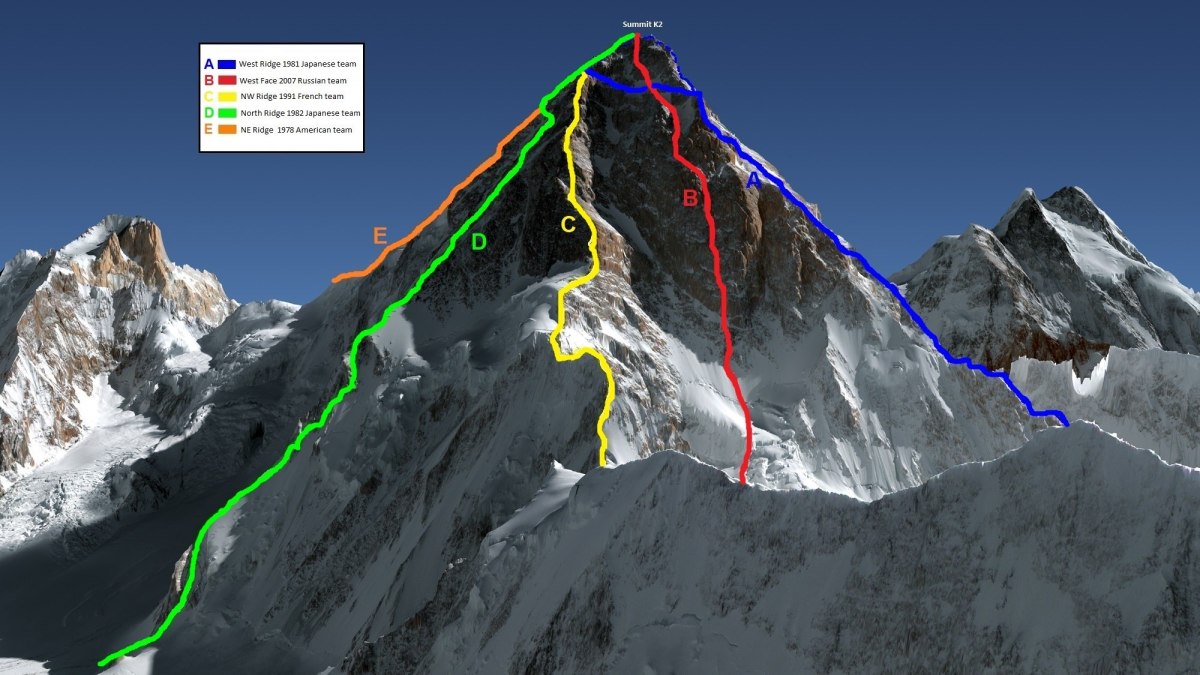
At 28,251 feet, K2, which straddles the Pakistan-China border, is about two and a half football fields shorter than Everest, but it's widely considered the planet's toughest and most dangerous mountain to climb, earning the nickname “Savage Mountain.” Unlike Everest, it is not possible to “walk” to the top; all sides …Although the summit of Everest is at a higher altitude, K2 is a more difficult and dangerous climb, due in part to its more inclement weather. As of February 2021, only 377 people have completed the ascent to its summit.15 Potential Hazards Of Mountain Climbing
- High Altitudes. High altitudes can lead to altitude sickness.
- Extreme Temperatures. When climbing in a hot environment, you risk getting heat injuries.
- Natural Disasters.
- Bad Weather.
- Lack Of Visibility.
- Wildlife.
- Poisonous Plants.
- Insufficient Planning And Preparation.
Humans are maladapted to an arboreal climbing lifestyle as compared to chimpanzees and other apes. We lack a midtarsal break and an opposable toe in our foot. Thus our feet are insufficient of the grasping capabilities seen in chimpanzees.

Grade 1: Easy glacier route. Grade 2: Not technical, but exposed to knife-edged ridges, weather, and high-altitude. Grade 3: Moderate to hard, including some technical climbing. Grade 4: Hard to difficult, with technical climbing.The trek to Everest Base Camp is mostly class 1 intermixed with brief class 2 sections.The list of causes is standard, both for Everest and the other eight-thousanders. These are mountain sickness, exhaustion, frostbite, falls, avalanches, rockfalls, and cracks.A study based on tracking hundreds of climbers who were active in 1930 showed that their average life expectancy was about three years longer than the predicted norm for their social class.

Tim Morgan, a commercial pilot writing for Quora says aircraft can fly above 40,000 feet, and hence it is possible to fly over Mount Everest which stands at 29,031.69 feet. However, typical flight routes do not travel above Mount Everest as the mountains create unforgiving weather.K2, second-highest peak, is almost as dangerous, with a fatality rate of 29%. Everest, by contrast, has a 4% fatality rate.Gangkhar Puensum
Most sources indicate that Gangkhar Puensum (7,570 metres, 24,840 ft) on the Bhutan–China border is the tallest mountain in the world that has yet to be fully summited.At 28,251 feet, K2, which straddles the Pakistan-China border, is about two and a half football fields shorter than Everest, but it's widely considered the planet's toughest and most dangerous mountain to climb, earning the nickname “Savage Mountain.” Unlike Everest, it is not possible to “walk” to the top; all sides …

Mountain climbers will work up more than just a serious sweat: you'll also target your abs, hip flexors, and shoulders in the process. They not only strengthen your core, they also promote the fat loss necessary to unveil the abs you've been building without aggravating back pain.MOUNTAIN CLIMBER | 1 MINUTE EXERCISES FOR BEGINNER