
Which animal will not drink water? Leia mais: What animals dont drink water

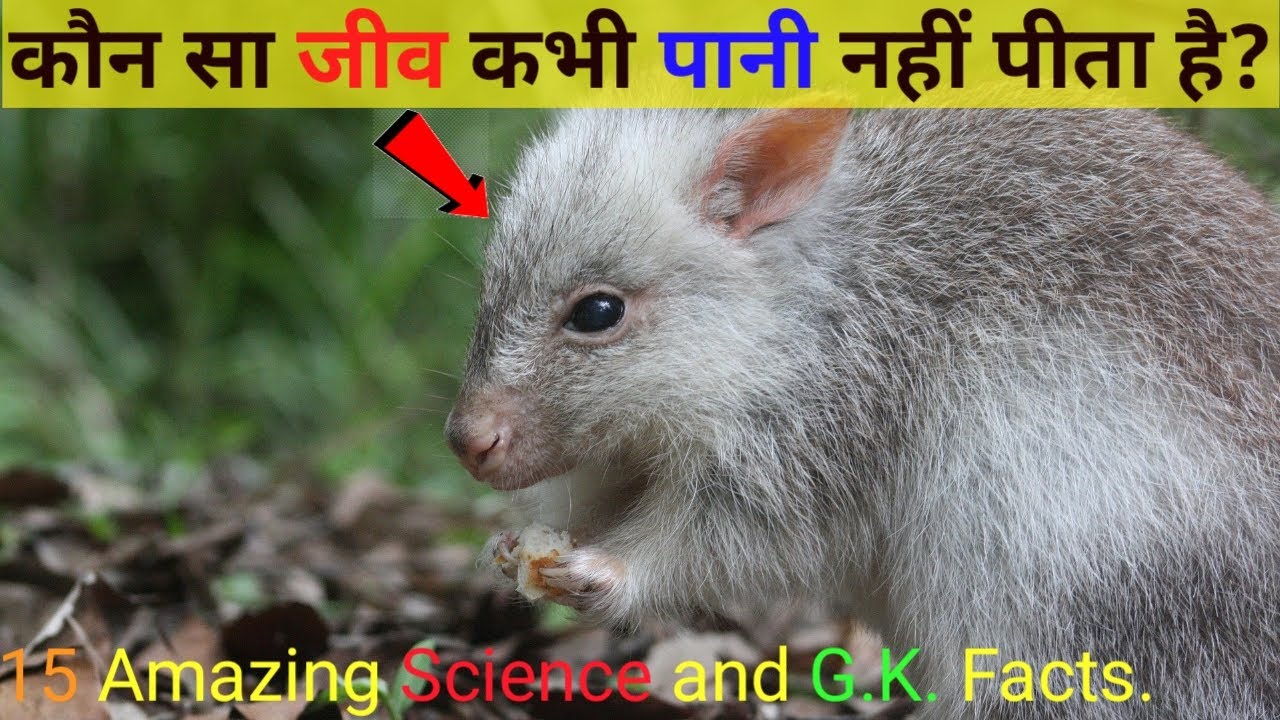
Kangaroo rats
Kangaroo rats, according to scientists, are the only animals that can exist without water. According to the findings, they do not have any water in their bodies for any of their digestive functions. Kangaroo rats can survive in deserts without ever drinking.
Leia mais
The most prominent animals that do not need to drink water
- Kangaroo Rat.
- This little rodent never drinks water throughout his life, and does not need to drink water at all, as he gets the necessary moisture from the seeds on which he feeds, but will that be enough!
- Jerboa.
- Thorny Devil.
- Sand Gazelle.
- Koala.
Snakes often drink droplets from rainwater or mist off of their own scales. These snakes depend on rain or mist for most of their water intake. Some have specialized scales to collect water droplets to drink off their body drop by drop, said Zach Marchetti, curator of animals.

Which bird do not drink water
The Jacobin Cuckoo, among many, is one of the unique creatures on earth. Also known as the pied crested cuckoo or Chatak, this bird only drinks rainwater drop when it pours. Doesn't matter how thirsty it might be, the bird does not drink any other kind of water, not even the collected rainwater.
Ants are small, but they can drink a lot of water depending on their body weight. Your typical ant, in an average setting, probably drinks about 7 microliters of water. This is equivalent to 1/5th of a drop of water.As well as getting water through osmosis, saltwater fish need to purposefully drink water in order to get enough into their systems. Where their freshwater counterparts direct all of the water that comes into their mouths out through their gills, saltwater fish direct some into their digestive tract.Frogs do not drink like we do; they absorb water directly through their skin in an area known as the 'drinking patch' located on their belly and the underside of their thighs.
Snakes often drink droplets from rainwater or mist off of their own scales. These snakes depend on rain or mist for most of their water intake. Some have specialized scales to collect water droplets to drink off their body drop by drop, said Zach Marchetti, curator of animals.
Do frogs sleep
Do frogs sleep Nobody really knows! At this point in time, there has been very little research in frog sleep patterns. It is known that they close their eyes, but no confirming brain scans have determined whether or not they actually have a true sleep period.
Animals that don't need sleep (bullfrogs and dolphins) Animals that don't need rebound sleep after using up all their energy (bees) Animals that show harmful side effects from sleep deprivation (humans)
Frogs do no more than the bare minimum, though, as they can't hear anything apart from the noises made by other frogs and their predators. Frogs' ear glands are sensitive only to the frequencies of sounds they need to hear to survive, and their brains react only to certain acoustic patterns.
Leia mais

Flatworms, nematodes, and cnidarians (jellyfish, sea anemones, and corals) do not have a circulatory system and thus do not have blood. Their body cavity has no lining or fluid within it. They obtain nutrients and oxygen directly from the water that they live .Jellyfish is an aquatic animal that does not contain a brain, heart, or lungs. It does not contain the brain but perceives responses from its tentacles. They have a mesh of nerve cells all over the body. Hence they are sensitive to touch.Snakes do not have an external ear, but they do have all the parts of the inner ear that we do. Their stapes—called a “columella”—is slightly different from ours in that it connects to the jawbone, enabling them to sense vibrations. However, they can only hear a portion of the sounds we hear.Can you guess what animals might have blue blood Lobsters, crabs, pillbugs, shrimp, octopus, crayfish, scallops, barnacles, snails, small worms (except earthworms), clams, squid, slugs, mussels, horseshoe crabs, most spiders.

jellyfish Turritopsis dohrnii
To date, there's only one species that has been called 'biologically immortal': the jellyfish Turritopsis dohrnii. These small, transparent animals hang out in oceans around the world and can turn back time by reverting to an earlier stage of their life cycle.But the bullfrog, Lithobates catesbeianus show the same reaction in both situations. This indicates that bullfrogs do not sleep. Lithobates catesbeianus is an animal that cannot sleep.The season can play a role in snake sleeping habits. Most snakes spend about 16 hours per day asleep. In the winter, that can climb to 20 hours.Snakes have infamously poor eyesight, which is why they resort to sticking out their tongues all the time to get a sense of their surroundings. But the creatures may have a way to improve their vision in a pinch.

Snails, spiders and octopi have something in common- they all have blue blood! We're not talking in the sense of royalty, these creatures literally have blue blood. So why is their blood blue and ours red One of the purposes of blood is to carry oxygen around the body.The short answer is ants have something similar to blood, but scientists call it “haemolymph”. It is yellowish or greenish. In vertebrates (animals with backbones such as humans, cats, dogs, snakes, birds and frogs) blood's main job is to move important things around the body.But the bullfrog, Lithobates catesbeianus show the same reaction in both situations. This indicates that bullfrogs do not sleep. Lithobates catesbeianus is an animal that cannot sleep.Regardless of their preferred mode, bats, elephants, frogs, honeybees, humans and more have something in common: They all sleep. In fact, scientists have yet to find a truly sleepless creature.

While fish do not sleep in the same way that land mammals sleep, most fish do rest. Research shows that fish may reduce their activity and metabolism while remaining alert to danger. Some fish float in place, some wedge themselves into a secure spot in the mud or coral, and some even locate a suitable nest.According to research, while trees may not sleep in the same way animals do, they do relax their branches during nighttime, which suggests that yes, trees have activity-rest cycles. These cycles can also vary depending on the tree species.