
What’s the hardest pitch ever thrown? Leia mais: What is the most difficult pitch to throw
Each baseball player has their own specialties. However, the two pitches that stand out to be the hardest to hit are the splitter and the slider. This conclusion is backed by research that has been done to detect the whiff rate for various pitches.
Leia mais
Fastest pitch ever thrown
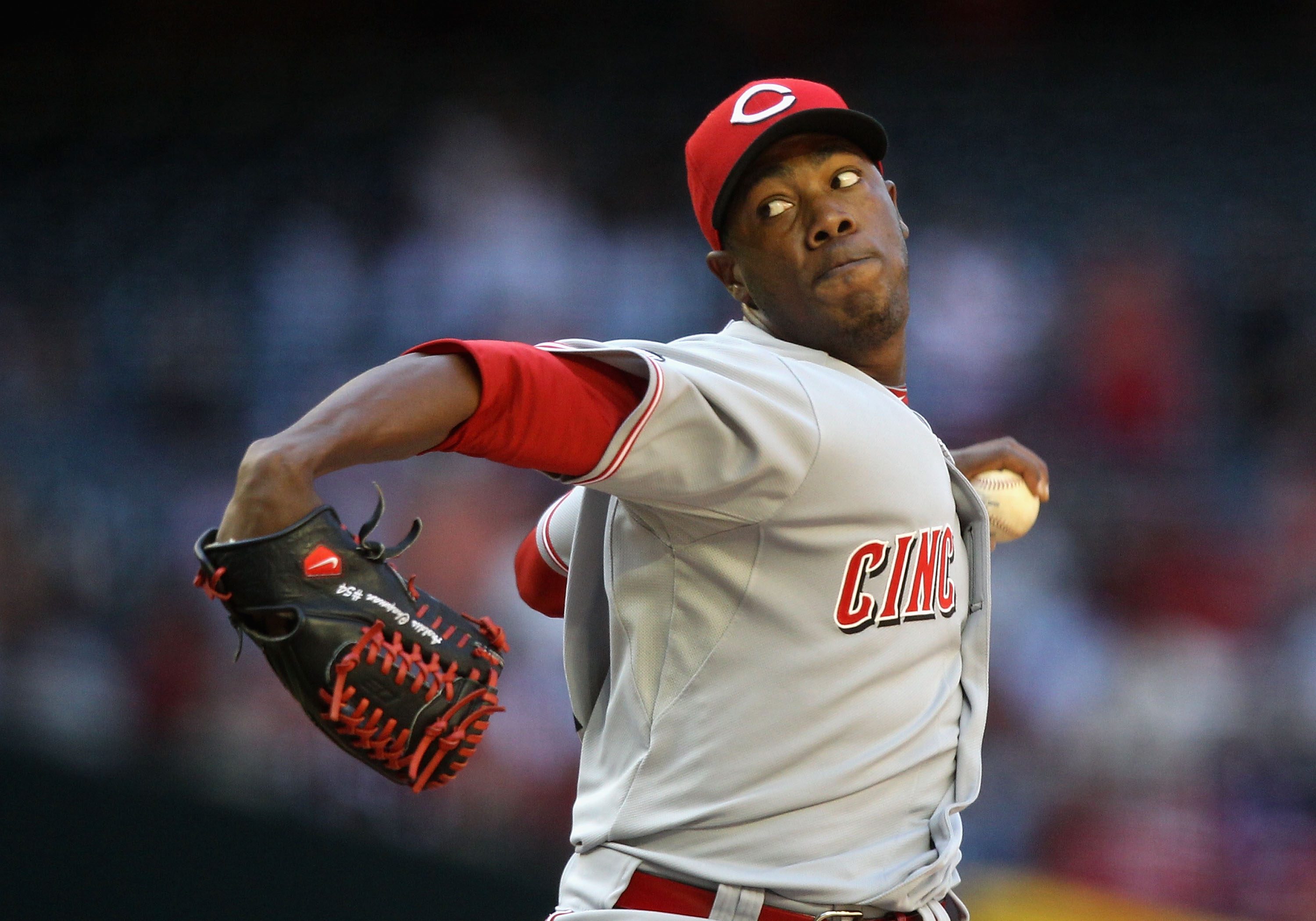
As a result, Aroldis Chapman is credited with throwing the fastest pitch in MLB history. On Sept. 24, 2010, Chapman made MLB history. Then a rookie relief pitcher for the Cincinnati Reds, the fireballer unleashed a fastball clocked at 105.1 mph by PITCH/fx.Nolan Ryan: 108.1 MPH.

Who threw the first 100 mph pitch
Some think that the very first pitcher to hit the 100 MPH mark was Walter Johnson. Johnson pitched for the Washington Senators from 1907 to 1927. Although technology was unable to give us a number to attach to Johnson's pitch speed, he once threw a ball that outpaced a moving motorcycle.
More and more pitchers are throwing triple digits. The fastest of them tops out at 105 MPH. WIRED examines why the 110 MPH fastball is almost impossible.13 And 14-Year-Olds
An average fastball from this age range is anywhere from 55 mph (on the low side) to 75 mph. A pitcher throwing 75 mph is better than most people for this age, and their fastball is at a high school quality. An average changeup for this age is approximately around the 50-60 mph mark.More and more pitchers are throwing triple digits. The fastest of them tops out at 105 MPH. WIRED examines why the 110 MPH fastball is almost impossible.

It is considered a trick pitch because, in comparison to normal baseball pitches, which run from 70 to 100 miles per hour (110 to 160 km/h), an eephus pitch appears to move in slow motion at 55 mph (89 km/h) or less, sometimes as low as 35 mph (56 km/h).
Has there been a 100 mph pitch
Jhoan Duran gave Alex Verdugo a nasty taste of his incredible pitch. The 100.8 mph "splinker" that Jhoan Duran threw to Alex Verdugo on Monday night was the first off-speed pitch in MLB history at 100+ mph, according to Minnesota Twins communications director Dustin Morse.
Koufax only had two pitches: a 97 mph fastball that physicists denied but all facing batters said was gospel truth: the ball would suddenly hop up before crossing the plate. Koufax also threw a curve that would drop 10-12-inches off the table.
As far as the technology of the time could tell us, Nolan Ryan threw a 100 mph fastball. Randy Johnson was clocked as high as 102.
Leia mais

The flaming fastball, equivalent to roughly 153 km/h (95 mph) on a big-league field, created a buzz across media outlets, including Yahoo Japan, the nation's biggest media portal.MPH 75 MPH
Pitching velocity by age in the U.S.
| Age | Average Velocity¹ | Your Goal² |
|---|---|---|
| 14 | 68 MPH | 70 MPH |
| 15 | 70 MPH | 75 MPH |
| 16 | 76 MPH | 80 MPH |
| 17 | 80 MPH | 85 MPH |
More and more pitchers are throwing triple digits. The fastest of them tops out at 105 MPH. WIRED examines why the 110 MPH fastball is almost impossible.A 100-mph fastball reaches home plate in under 400 milliseconds. The swing itself takes about 150 milliseconds. That leaves less than a quarter of a second for a batter to spot the pitch and decide whether and where to swing.
Pitching velocity by age in the U.S.
| Age | Average Velocity¹ | Your Goal² |
|---|---|---|
| 15 | 70 MPH | 75 MPH |
| 16 | 76 MPH | 80 MPH |
| 17 | 80 MPH | 85 MPH |
| 18 | 83 MPH | 88-90 MPH |
13 And 14-Year-Olds
An average fastball from this age range is anywhere from 55 mph (on the low side) to 75 mph. A pitcher throwing 75 mph is better than most people for this age, and their fastball is at a high school quality. An average changeup for this age is approximately around the 50-60 mph mark.An illegal pitch may be quick pitch (i.e. a pitch made before the batter is properly set in the batter's box), a pitch made while the pitcher is not in contact with the pitching rubber, or one in which he takes an extra step while making his delivery.In the pitch-tracking era (since 2008), there have been 223 MLB pitchers to hit 100 on the radar gun, according to Baseball Savant's Statcast.

100.9 miles per hour
The most widely quoted response is Nolan Ryan, whose fastball was "officially" clocked by the Guinness Book of World Records at 100.9 miles per hour in a game played on August 20, 1974, versus the Detroit Tigers. A record that's still included in the book.The fastest of them tops out at 105 MPH. WIRED examines why the 110 MPH fastball is almost impossible.This 35.1 MPH Frank Schwindel pitch is the slowest (known/measured) MLB pitch to ever get hit for a home run!The average fastball velocity for pitchers 10 years old and younger is between 40-50 mph. The average change-up speed for this age group is about 10 mph slower, making the velocity between 30-40 mph.

At 75+ mph would be very good (and probably a ticket to the sophomore or JV team. At 80+ would be exceptional (and a ticket to the varsity at most schools). Those are average speeds.between 87 and 95 MPH
Prototypical Division I pitching recruits throw anywhere between 87 and 95 MPH on a consistent basis. It is important to remember that coaches are looking for pitchers to consistently throw at this velocity, not just touch it every once and awhile.